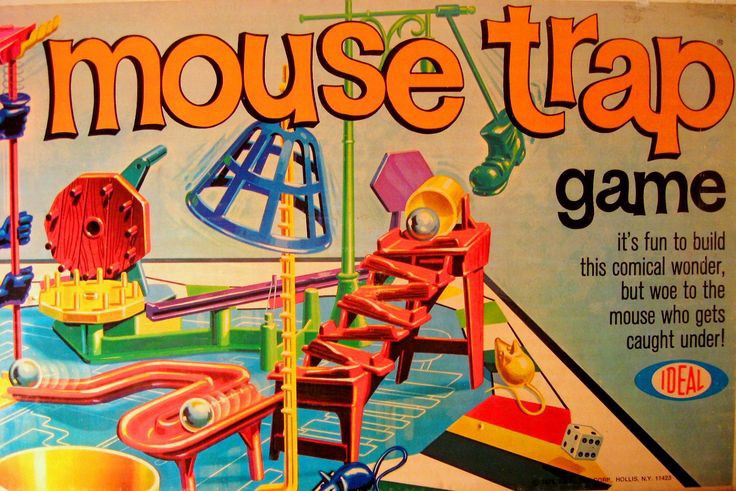
What’s in a game?


“the play’s the thing/Wherein I’ll catch the conscience of the king.”—Hamlet (2.2.539-40)

One of my teachers, an American director named John Dillon, once told me every scene in a play is a chase scene. I vaguely remember in his “Directing Shakespeare” course at Sarah Lawrence (where I did my MFA) as actors, us literally running around the theatre chasing each other while we said our lines. Over the years, the full extent of this provocation has unfolded to me time and again. In the theatre, someone is always actively pursuing something or someone. It’s gameplay.

In these initial Hamlet rehearsals, each time we’ve put a scene on its feet David has asked the ensemble, “What’s the game of this scene?” which usually provokes a series of offers. For example, when rehearsing 1.1 with the sentinels and Horatio on the battlements these are some of the potential games we came up with:

-“Who’s the best security guard?”

-“The first one to be scared is a dick”

-“Trauma topping” (i.e. who has the worst ghost story)

Testing these games in rehearsal is fun, active, and adds dynamism to the scene. Everyone wants to win.

The biggest game in Hamlet is the one she plays with Claudius throughout the entire play, ending with the final fencing match. One move is the play-within-a-play, The Murder of Gonzago, which Hamlet inserts lines into so as to ensnare Claudius into exposing his guilt. Hamlet’s adaptation goes beyond writing additional lines to re-titling the play. Claudius asks, “What do you call the play?” to which Hamlet responds, “The Mousetrap.” A mousetrap is of course a device for catching small rodents. A“mouse” could also figuratively mean a person who is small, timid, weak, or insignificant. All Claudius need do is take the bait, and it will snap, rendering him completely powerless and effectively destroying him. [Another interesting view on “mousetrap” is that the word can also be a euphemism for female genitalia, vagina, and Hamlet uses repeated sexual language throughout this scene.]  The game seems to be simple: catching consciences. What’s more fun to probe than naming the game is considering the game pieces. Why a play? What aspects of theatre make this game work? It is worth noting that in this instance it is a game played not only between actors but also between actors and audiences.

Here are a few thoughts (but I’ll leave them as thoughts so you can play the game yourself):

Hamlet says, “The purpose of playing, whose end, both at the first and now, was and is, to hold as ’twere the mirror up to nature: to show virtue her feature, scorn her own image, and the very age and body of the time his form and pressure.”

Theatre is a public gathering, a shared experience.

Theatre is an act of remembrance. Literally, to “re-member,” as in to reconstruct, put back together, animate.

Theatre is empathy.

Theatre is confession.

Theatre is reflection.

Theatre is storytelling.

Theatre is life.

We could say a thing lives or dies by the story that is told.

Allusion to Benedict Cumberbatch’s performance as Hamlet | Colorado Springs | Photo by Amy Golden
(Source: https://herebythemaverick.wordpress.com/2017/10/02/hamlet-caught-in-mickeys-mouse-trap/)

Thy Name is Woman.

David held auditions for Hamlet separately to the main company auditions. Twenty-four women auditioned for the role, and several said even the opportunity to be considered for the part was meaningful. Almost all of the performers used Hamlet’s first soliloquy “O that this too too solid flesh would melt” (or “sullied” or “sallied) from 1.2. Perhaps this was the popular choice because it was the first? Perhaps it moved up the rankings because of the obvious avoidance of “To be or not to be”? Whatever the case, hearing “Frailty, thy name is Woman” in the mouths of so many women was jarring and provocative.

As part of the process, David had a chat with each of the auditionees asking them their thoughts on Hamlet as a woman. These are some of the edited responses:

-“Hamlet is the most feminine of Shakespeare’s male characters.”

-“Easier to connect with the vulnerability”

-“Hadn’t thought of it that way [Hamlet as a woman]. Hamlet is unformed, immature, but not realising. We see immaturity different in women.”

-“Loving, passionate, calculating, more aware of the power structures.”

-“Self-hatred”

-“Women are free-giving. In New Zealand, men are more closed off.”

-“Hamlet doesn’t change as much but how you see other characters changes. The biggest difference would be the sword fight. Violent actions are very masculine.”

-[There’s a concept of] “stay pretty while you are angry. . . but I would like to play with femininity as an icon of strength.”

-“Everyone can have an existential crisis.”

-“more sulky, more childlike, power imbalances, easier to sympathise with Hamlet”

-[I would want to ] “bring a softness to him.”

-“I don’t know that it changes a whole lot for me. It changes the Freudian relationship with the mother. ‘Frailty thy name is Woman’ becomes self-effacing.”

-“Hamlet rails against his mum and Ophelia so that becomes self misogyny.”

-“That’s an interesting question. It’s easier to play on [Hamlet’s] feminine sides. Men never talk about their feelings . . . It’s in the character already but not played upon.”

-“It changes the Gertrude/Hamlet relationship.”

These responses intrigued me. I wondered how many of them came from actually reading the play or an inherited tradition of criticism and performance history? I was also struck by the number and nature of stereotypical gendered-behavior that seemed to arise in response (i.e. men are not as emotional).

One auditionee compared the idea to the TV show The Crown, which was fascinating, the concept of a female, Elizabeth II in this case, who has been raised from a young age to be a monarch. This is an even more complex idea when one considers that Elizabeth II’s namesake was Queen Elizabeth I, the reigning monarch during the time Shakespeare wrote Hamlet.

Elizabeth I at Tilbury where she said, “I know I have the body of a weak, feeble woman; but I have the heart and stomach of a king, and of a king of England too.” She was supposed to have been dressed in armour.

Like Hamlet, Queen Elizabeth I actually used the word“prince” (a somewhat gender neutral term at the time) to describe herself on a few occasions. As many studies have established, Queen Elizabeth was “a galvanizing force for a pervasive Elizabethan anxiety about female power.”[i]Studies of her rule have shown it to be thematically gender-bending: incorporating masculine terms and employing the medieval doctrine of the king’s two bodies in a sense that she might have a biological female body and a male body politic. Susan Frye contends that Elizabeth in fact created a new conception of monarch: “a female body politic.”[ii]Frye asserts, “This gendering of her two bodies became the queen’s justification for what I call engendering herself—assuming the assigned gender roles of women, men, or both, or someone in between, as the occasion demanded.”[iii] Mary Beth Rose writes, Elizabeth“creates her heroic persona by monopolizing all gendered positions, taking rhetorical advantage of the special prestige of both female and male subject positions as these were understood in the Renaissance without consistently privileging either.”[iv] Or as Lisa Hopkins writes, “The queen who could be a king when she wanted to be also knew that sometimes it may pay to be a lady.”[v]I have written elsewhere (https://www.palgrave.com/gp/book/9783319745176) about these issues (and their connection with theatre—boy actors specifically). In our script, we’ve retained the use of “prince” and “lord”. It will be interesting to see how much these questions of the gendered nature of power and politics surface in our production with a female heir the throne of Denmark.


[i] Katherine Eggert, Showing Like a Queen: Female Authority and Literary Experiment in Spenser, Shakespeare, and Milton (Philadelphia: University of Pennsylvania Press, 2000), 2.

[ii] Susan Frye, Competition for Representation, 13.

[iii] Ibid.

[iv] Mary Beth Rose, Gender and Heroism in Early Modern English Literature (Chicago: University of Chicago Press, 2002), 27.

[v] Lisa Hopkins, “The Words of a Queen: Elizabeth I on stage and page,” in The Rituals and Rhetoric of Queenship: Medieval to Early Modern, ed. Liz Oakley-Brown and Louise J. Wilkinson (Dublin: Four Courts Press, 2009), 152.

This is I.

Summer Shakespeare Wellington announced its 2019 season of a female-led Hamlet in June, coincidentally at the same time the Auckland-based Pop-up Globe received much backlash for its launch of a “#metoo-themed” and “feminist” season of all-male Shakespeare. I say and mean “coincidentally” because Summer Shakespeare’s decision to cast the titular character as female was not reactionary, but had been in place some months before the Pop-up Globe season was announced. Our director, David O’Donnell, said in response to the controversy,

“I’ve seen some all-male Shakespeare productions, and while they can be interesting from a historical perspective, they propagate offensive patriarchal power structures which I doubt that Shakespeare himself would have agreed with. . . I live in a multi-gendered world, so all-male Shakespeares aren’t relevant to me personally and don’t reflect contemporary society.”  (source: https://www.newshub.co.nz/home/entertainment/2018/07/metoo-themed-but-all-male-nz-pop-up-globe-s-shakespeare-play-draws-backlash.html)

In his pitch for the production, David said, “Hamlet is widely regarded as a ‘universal’ character because he expresses so many truths about the human condition. BUT, there is a problem. Hamlet is a young, privileged, rich white guy. How universal is that?” David proposed to cast Hamlet as female.

It is certainly true that Hamlet is a, if the not the, universal character. As William Hazlitt famously said, “It is we who are Hamlet.” It has been said that whenever anyone says anything about Hamlet they are actually speaking about themselves; Hamlet is a proxy for our interiors and experiences. A perfect example of this is French Romantic artist, Eugene Delacroix, who in 1821 painted a self-portrait as Hamlet. Twenty years later the artist created a series of lithographs based on Hamlet and in those lithographs Delacroix used a girl as a model for Hamlet’s hands. (Delacroix was quoted as saying hands are as important as faces in conveying the emotional content of a work.) If the idea of Hamlet as universal figure is, well, universal, then just as much so the idea of Hamlet as female or feminine is common.

louvre-autoportrait-dit-en-ravenswood-ou-en-hamlet-eugene-delacroix.jpg
Eugene Delacroix, Self-Portrait as Hamlet, 1821

The tradition of female Hamlets goes back to the 18th century: Charlotte Charke (who is considered to be the first), Sarah Siddons, Charlotte Cushman, and Sarah Bernhardt all played Hamlet. Some of the most famous Victorian Hamlets were women. The idea of a female Hamlet went beyond the theatre with many critics taking note of Hamlet’s apparent feminine qualities, and in 1881, Edward P. Vining went so far as to declare Hamlet was a woman in his book. The Mystery of Hamlet. Female Hamlets also appeared on screen with Danish actor Asta Nielsen playing the role as early as the 1920s in a silent film. And female Hamlets aren’t a historical phenomenon. Recently, Maxine Peake played Hamlet at the Royal Exchange to much acclaim, and Michelle Terry, Artistic Director of Shakespeare’s Globe, played Hamlet at the outfit this year.

maxine-peake-as-hamlet

I won’t go into the mountain of critical discourse that surrounds Hamlet as woman or Hamlet’s supposedly “effeminate” qualities in this blog. It ranges from his lack of beard (i.e. “women could legitimately play the prince because he was not fully a man” – Belsey, “Hamlet and Gender,” 114) to the proposition that Hamlet is literally a princess in disguise so “Frailty thy name is woman” is self-directed a la Vining. If you are interested in these lines of thoughts, check out any of the books or articles I’ve posted.

image1

What is more interesting to me than the content of the discourse is the existence of the actual arguments themselves. If, for whatever reason, centuries of critics, artists, filmmakers, and theatre artists have cast Hamlet as female, effeminate, or androgynous then it means that they have been unable to firmly centralise the universal protagonist as male. Hamlet rejects essentialism and societal norms. Hamlet is other, ambiguous, both, unable to sit comfortably at one end of a binary scale, disruptive of our assumptions about gender. I believe this gendered fluidity IS one of the reasons we are all drawn to Hamlet. If Hazlitt is right and it is “we” who are Hamlet then Shakespeare is asking us to empathise with and question all aspects of our gendered identities.

And who is Hamlet? The play’s opening, and perhaps also central question, “Who’s there?” is answered by Hamlet in the graveyard with the most powerful and simple of statements, “This is I, / Hamlet the Dane” (5.1.246-47). Here, Hamlet comes out of hiding to a fully present state of being asserting their, her, his identity simply as “I”. Then in the following line, Hamlet reclaims a title, discovering that nothing—family or politics—can steal your birthright. It is your mana. Part of that birthright is the right to decide or question the terms of your embodied life—gendered or otherwise. When I think about Hamlet these days, this is what I am left with. The potency and bravery of standing up in the world and proclaiming “This is I.”

Who’s there?

You’ve found your way to the rehearsal and production blog of the 2019 Wellington Summer Shakespeare production of Hamlet, opening this February in the Botanic Gardens. This blog is facilitated by production dramaturg, Dr. Lori Leigh and explores our research, methodology, and processes, serving as a joint resource for the actors and creative team. It’s also open to the public to follow along.

Summer Shakespeare Wellington is administered by the Summer Shakespeare Trust. The 2019 season, Hamlet, is directed by David O’Donnell and stars Stevie Hancox-Monk.

Summer Shakespeare has been an annual outdoor theatre event in the capital city since 1983, when students at Victoria University of Wellington presented A Midsummer Night’s Dream in the Victoria University Quadrangle.  For over thirty years, Wellington audiences have been treated each year to large-scale, large-cast productions of Shakespeare in a variety of settings including the Dell in the Wellington Botanic Gardens, Civic Square, Te Papa and in 2018 in Reading Carpark.  Our productions have ranged from some of the most popular to some of the most obscure plays in the Shakespeare canon, approached with diverse concepts and staging, directed and performed by both the country’s newest talents and leading practitioners alike. For more information about Summer Shakespeare Wellington visit our website at http://summershakespeare.nz/

Stand and unfold yourself. 

SS_Hamlet_Email-Sig_600_150_Final