“Never Doubt I Love”

Thursday was Valentine’s Day and our school’s preview for Hamlet. In the spirit of both of these occasions I decided to turn to the cast and ask them about their first memory of Shakespeare (which often occurs in school) and what they love about the Bard.

Thomas Barber (Ghost): As far as I can remember I was about 13 and my father had borrowed a BBC audio recording of The Merchant of Venice from the local library. Upon listening to it I was struck by the pathos of Shylock’s character and the immense external forces (religious intolerance, tradition and social standing etc.) acting on him and rendering him a villain in the eyes of the Christian citizenry of Venice. I was resolved to try and shark up a list of lawless resolutes of my own to put together some scenes for our local SGCNZ competition. We did and got to Wellington, and some of us would have gone on to the two week thingy [he means NSSP?] but were too young at the time.

The works remind me that there is a chain of connection, understanding and humanity that stretches back centuries and even millennia – the fact that we perform his plays today, and that Seneca for example was popular in his time is incredible. The sheer liveliness and grab-bag of mixed human emotions, when carefully brought out on the stage is powerful stuff. The rhythms and variety of the speech just sounds good on an almost visceral level too, bit clichéd but it really is like jazz or any other kind of complex musical form. I must’ve gone around for a couple of weeks muttering that line of Horatio’s about the ‘moist star upon whose influence Neptune’s empire stands’ simply for the pleasure of saying it.

Maddie Brooks Gillespie (Player Queen—who is still in high school!): So, my first experience with Shakespeare was 7 years ago. For my 9th Birthday, my Grandfather Eric Brooks sent me a copy of Romeo and Juliet, along with the Baz Luhrmann film version (because this is the only reasonable gift for your 9 year old granddaughter). I was hooked straight away, and have been ever since. E.B passed away last year, just after I got selected for YSC, which is going to be such an amazing experience that I never would be getting to do without him, so it feels very special. I’m actually going to be using the film of Romeo + Juliet at a fundraising event in the next month of so to help me get to the Globe. The first time I performed in a Shakespeare was when I was 11 as Puck in the SGCNZ Primarily Playing With Shakespeare production of Midsummer Night’s Dream, followed closely by Prince Edward in Richard III with the Bacchanals.

Elsie Bollinger (Rosencrantz): When we were kids, I must have been 5 or 6, Mum and Dad sat us down and explained that we were going to a play. It was written by a man named Shakespeare, and though it was written in English, we weren’t going to understand it. Because of this Mum proceeded to give us a summary of As You Like It in the car on the way there. When we arrived and looked at the programs with Much Ado About Nothing splashed on the cover we had to accept that we weren’t going to understand what was going on for the next couple of hours. However it was the opposite. The play was set in a tent on a field and when the soldiers returned from the war at the beginning of the play it was a rugby team carrying Claudio on their back. I still remember it clearly. I also remember the scenes where Benedict and Beatrice spy on their friends respectively and discover that they have feelings for one another. There were tables and chairs, probably in preparation for Hero’s wedding, that the lovers scrambled under and over. It was lots of fun. When our company The Candle Wasters was first formed and we sat around thinking of what Shakespeare play we would adapt into a webseries, Sally and I told this same story. We then made Nothing Much to Do, and the soldiers became soccer players, inspired by that production. It may have even been a Summer Shakespeare that we saw [it was!].

Shakespeare is important now because it’s still relevant and that’s fascinating. Humans haven’t changed terribly much in 400 years, and there’s a comfort in that when you’re discussing emotions like love and grief. It’s satisfying to perform and communicate to a modern audience what was also being said to the Elizabethans. What I love about Shakespeare’s texts is the more you delve into them the more interesting they become. I am constantly astounded by how accurately Shakespeare captured the human condition. Because that will always be relevant it will always be interesting, and people will continue tell his stories.

Sally’s High School Hamlet Comic

Sally Bollinger (Guildenstern): [Sally and Elsie are sisters and have the same story, but I had to include it twice because it’s so good. Also I love the different perspectives.] My first experience of Shakespeare was Wellington Summer Shakespeare, Much Ado, when I was about 10. My parents said we’re going to see a play that is in English but you won’t understand (which sounded pretty stupid to me) then they accidentally read us a plot summary of As You Like It. Loved the play anyway. I also spent a lot of my final year at high school in art class doing a ten-page full colour Hamlet comic.

Sally’s High School Hamlet Comic

Andrew Clarke (First Player): So my first experience of Shakespeare was probably in my final year of Primary school. Our school did incredibly condensed musical version of Midsummer Nights Dream (it lifted the majority of the lines from the play, simplifying the language). I suppose my first proper experience of Shakespeare would be performing in Sheilah Winn (student directed Taming of the Shrew and Teacher directed Much Ado About Nothing).

Daniel Daigle (Laertes): My first literal experience with Shakespeare was learning about soliloquies in the 8th grade, and I had to memorize Puck’s final speech in Midsummer. I’d say my first true experience was my freshman year of college when I worked with the Actors from the London Stage to produce a 5 person production of Midsummer. I got to play Puck, Theseus, Snout, and Peaseblossom. It was super awesome because I was not only learning from English actors who had RSC credits, but we toured the state teaching workshops and performing for high schoolers. What I love most about Shakespeare is… they’re good shows? They’re fun and challenging. They’re timeless . . . I just enjoy it.

Stevie Hancox-Monk (Hamlet): When I was really young I had an obsession with tiny objects – I had an old ink press board that I used to display all my tiny finds, each in a tiny cubby hole. My parents had this miniature complete works of Shakespeare and I would take a few plays and carry them around with me everywhere and read them at night. My favourite ones to steal were As You Like It, Hamlet, and Antony & Cleopatra. I’m not sure where all of them are now, but I did find a mini Henry IV Pt 1 in a bag a few years ago. My parents also used to tell each of us (as we fell asleep at night) “good night sweet prince, and flights of angels sing thee to thy rest.”

As a 14 year old, I played Gower in our school’s UOSWSF entry of Pericles. I wore tails, a top hat, and carried a cane – which I absolutely loved.

Simon Howard (Francisco): My first school experience with Shakespeare would be studying Romeo and Juliet at GCSE level English Literature. Acting out the balcony scene I recall and watching the Leo Di Caprio film version. At A Level English Literature we studied Othello and got to go and watch the RSC 2009 version at northern stage in Newcastle. I loved studying that play. My best school experience though was doing Henry V’s once more unto the breach as part of a fundraiser for an expedition me and 15 other students went on to Everest base camp in 2009. It was a night of poetry, Python and the Bard and I got asked to do it a few more times that year for various events in the town. Strangely in four years of studying drama/performing arts (ages 14-18) we never once touched Shakespeare. Lots of Kafka, Brecht, Stanislavski and the like though…

Dylan Hutton (Horatio): My very first experience probably came at about 15 at high school. I’d neither read nor seen any Shakespeare at the point. I was cast in a 5 minute scene from A Midsummer Nights Dream for the SGCNZ festival where I played a very awkward Bottom who didn’t understand the language or know how to sing. It sucked. And the whole thing was Bollywood themed for some reason.

I’ve recently been thinking that because around 400 years one man decided he had some stories to tell (and wanted to make some money), my life is where it is now. The way that Shakespeare has shaped and influenced the history of theatre and the course of my life in arts is massive. I owe some of my passions and closest friends to William Shakespeare, his works, and the history of them. I love that there is such a wide variety of magnificent plays with relevant themes, relatable characters and the most beautiful language ever written that is still relatable and poignant today.

Isabella Murray (Marcellus): My first Shakespeare experience was part of an acting course I did, we did scenes from Midsummer Night’s Dream three times over the three years. My first school Shakespeare experience was studying it in English, also Midsummer Night’s Dream. We had to learn a monologue off by heart, and perform a scene with others. My teacher emphasised the performative nature of it. No focus was given to the verse though in any of the Shakespeare work I did until uni.

I always really loved Shakespeare. I was part of the Shakespeare committee at my school. I think the stories and characters are inherently wonderful, but it’s also fantastic to have plays and characters that have been interpreted in so many ways. They’re works that keep evolving as they continue to be performed. The biggest change since school is I’ve been able to appreciate the actual text now. So much of Shakespeare at school was just trying to interpret the text in a more contemporary way that what the actual text said, and the verse was overlooked. So I think I appreciate the actual writing more now.

Jenny Nimon (Ophelia): My first experience with Shakespeare was a 15 minute scene of Macbeth when I was in Year 11 for SGCNZ UOSWSF. I played one of the witches and we did it in full goth with Scottish accents, and took it down to Nationals. It was cut together with a Lady Macbeth scene, so we had an all female cast.

Kent Norris (Barnardo): My first ever experience with Shakespeare was in Year 9, at Paraparaumu College… getting involved in the SGCNZ University of Otago Sheilah Winn Shakespeare Kapiti Regional Festival in 2015, in which I played Solinus, The Duke of Ephesus in the final scene of The Comedy of Errors. Literally the only reason I went along to the meeting was because I was trying to impress someone at the time; we somehow won the 15 Minute Direct Entry to Nationals and from there I was awaken to just how awesome and spectacular the works of the Bard were!

I’m pretty much a Shakespearaholic at this point. The whole ‘Shakespeare obsession’ probably really took off at the end 2016 and has only grown stronger and more interesting from there. I view the Bard as one of the most influential and important individual to have “livèd in the tide of times.” I dream of one day being an actor in a travelling Shakespeare Company, or even acting at The Globe Theatre in London or the RSC. I can’t wait to one day play Iago, Richard III, Edmund and Bottom, the Weaver.

Ivana Palezevic (Polonius): It actually was Hamlet. I was in year 9 English class and we had a visiting teacher from the UK. And I remember that instead of reading the text quietly amongst ourselves and discussing themes (as my other friends in other classes did) this guy actually read the text to us. We did several scenes and he would act them out and give the characters life and personality. Suddenly everyone was excited to come to English class just to hear how the story ended. And for me as a performer I was mesmorised. His ‘to be or not to be’ speech he just took his time and looked us in the eye and we were there with him. Suddenly Shakespeare was fun. That’s the power of speaking it versus reading it. He encouraged us all to explore Shakespeare more outside of class and see all the wonderful characters he has created. And since then I’ve picked up the complete works in the school library and read more and more. Got involved with Sheilah Winn and the rest is history. Sorry that is quite a long story. Perhaps appropriate for who I play and I wish i could remember the teacher’s name.

I have really come to respect what Shakespeare represents. This person has written, in the most articulate way possible, what we as humans experience on the sometimes most indescribable level. How do you express the complicated emotion in that moment? Well, this person did. And even had to make up words to achieve it sometimes. But what this writer has also achieved for centuries is bring together people to tell the same over and over again. The issues of the story are the same in the 16th century. And always will be. Even in 2019. The best part for me in performing Shakespeare, is meeting the people who want to share this story with me. In doing Hamlet with Summer Shakespeare, with a cast of up to 20 people, all with extraordinary backgrounds, different experiences and values, we are all together over the summer sharing something in common. The plays of Shakespeare, which are universal in theme and relationship. No matter who you are. It’s a common ground between us as performers and that perhaps is the great genius of the work. And lastly, I am told he has written over 1000 characters in his career. I hope throughout mine to have a chance to meet them all.

Jane Paul (Gravedigger): My first experience was A Midsummer Nights Dream in year 9 English class. I remember feeling very confused by all the plots.

Mitch Tawhi Thomas (Claudius): When I was about 9, my grandmother had a big old dusty, thick book full of “Shakespeare’s stories” – about 5 page versions of most of the high flyers, separated into comedy, history, tragedy. Complete with old school illustrations. About a year later I got the complete works and would dip in and out if it. Marvelling at the language. I was the only one in my whānau that was interested. Years late at high school, the staff had a Shakespeare day and the whole school – like frickin everyone! – dressed as different characters and went about the day except at lunchtime we assembled in the hall got a massive “banquet” and the teachers performed an excerpt. Those were the days!!!!

Maggie White (Gertrude): My first Shakespeare memory was when I was about 10 years old. My Granddad (who at this point was in the early stages of dementia), had a lot of books, and was a very well read man. One day, in a moment of lucidity, he handed me a copy of the Complete Works (an Oxford edition from 1962). All he said was “You’re going to need this”. I had heard of Shakespeare before this of course, but this was the first time I actually looked at his work on the page. Then, when I was in high school we would do scenes and soliloquies. I explored Lady MacBeth, Helena from MSND. I loved (and still love) the words, how they feel and taste. How much they express. I had a wonderful drama teacher, Dr Bronwyn Fenwick who really began to open Shakespeare up for me. We never actually did a full Shakespeare as a school, but we did to a production of Jean Betts’ Revenge of the Amazons, in which I played Helena. I loved it! I think what I love most about playing Shakespeare is that you get to tell stories through characters who are pushed to the extremes of feeling and circumstance. Shipwrecks, storms, wars, love, loss, grief, hatred, fear. The stakes are so high, the passion so consuming. I love that I get to play characters who are experiencing something so profound that it comes out of them as poetry.

Sam Tippet (Stage Manager): My primary school did a version of Midsummer but it was ‘A Kid Summer Night’s Dream’ hahahaha apart from that, Sheilah Winn in 2010.

Pauline Ward (ASM): I used to have a picture book version of Midsummer Night’s Dream that I’d read every time I ran out of books, and the first play I remember seeing was Hamlet, just after the Christchurch earthquakes. The director’s son was playing Hamlet but he died in the CCTV building, so the director ended up playing the role himself.

*SGCNZ refers to Shakespeare Globe Centre New Zealand: http://www.sgcnz.org.nz/

“Sheilah Winn” is the University of Otago Sheilah Winn Shakespeare Festival (UOSWSF).

**The production of Much Ado that Elsie and Sally refer to was the 2005 Wellington Summer Shakespeare, directed by Jacqui Coats and Rachel Henry.

TO BE OR NOT TO BE: SPOILER ALERT

Fake Dictionary, Dictionary definition of the word Tragedy.

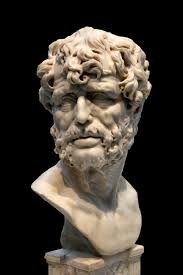
Hamlet is a tragedy, and by definition a tragedy ends in death. Specifically, Hamlet is a revenge tragedy. The works of Shakespeare and his contemporaries were largely influenced by Roman tragedies, in particular those of Seneca. Upon the entrance of the travelling players, Polonius describes their talents as “the best in the world . . . Seneca cannot be too heavy” (2.2.420, 424).  In other words, they are able to meet the burden of performing tragedy. (I wonder if this might be Shakespeare challenging his company of actors in the moment?)

This metatheatrical reference is, in itself, a convention of revenge tragedy. Hamlet has many of the conventions, including a ghost, murder, and madness. Horatio foreshadows the tragedy even earlier by referencing that of Julius Caesar:

HORATIO: In the most high and palmy state of Rome,
A little ere the mightiest Julius fell,
The graves stood tenantless, and the sheeted dead
Did squeak and gibber in the Roman streets;
As stars with trains of fire and dews of blood,
Disasters in the sun; and the moist star,
Upon whose influence Neptune’s empire stands,
Was sick almost to doomsday with eclipse.

(1.1.125-132)

In the past week, we’ve spent a lot of our rehearsal time on the final act of the play. At the end of the play, all of the leading characters are dead. It’s a difficult part of the play to rehearse. Polonius is murdered in the third act. Ophelia drowns in the fourth act. But by the time we get to the final scene, there are four bodies on stage—poisoned and/or stabbed, as well as the threat of a fifth death. Horatio picks up the poisoned cup and attempting to drink says, “I am more an antique Roman than a Dane. / Here’s yet some liquor left” (5.2.374-75).  (Again note the Roman reference.) Ensuring that Horatio will not meet the same fate as her, Hamlet drinks the contents of the cup.

The English Ambassador describes the scene as “dismal”. Fortinbras compares it to a bloody battlefield. Though death is thought to be “the great leveler”—a thought which is invoked in the Gravedigger scene—this past week I’ve been struck by the particularity of the deaths.

The Queen is the first to die, and she does so by proclaiming loudly her cause of death:

No, no, the drink, the drink! O, my dear Hamlet!
The drink, the drink! I am poisoned.

(5.2.340-41)

Gertrude dies with her “dear” daughter’s name on her lips.

Laertes also openly expresses his cause of death while exposing the villainy of Claudius,

The foul practice
Hath turned itself on me. Lo, here I lie,
Never to rise again. Thy mother’s poisoned.
I can no more. The King, the King’s to blame.

(5.2.348-51)

Several lines later, Laertes’ dying words are those of forgiveness.

Stabbed by Hamlet with the venomous sword, the King’s dying words are,

O, yet defend me, friends! I am but hurt.

(5.2.355)

It’s as if every single character in the play—especially in the final scene—has an awareness, if not acceptance, of their death but Claudius.  He can only admit he’s “hurt” and in this still pleads for rescue. To me, this is Shakespeare doing his brilliant revelations of character while giving us those mind-boggling insights into the human condition. Claudius has spent the entire play lying. So much so that in his final moments he’s become such a master deceiver that he no longer even contains the capacity to be honest with himself. He gets no further speeches or dying words as Hamlet forces the King to drink from the poisoned cup. Laertes gets the last words here, “He is justly served” (5.2.359).

In complete contrast, Hamlet takes nearly 60 lines to die. In her death, she manages to forgive Laertes (“Heaven make thee free of it.”), say goodbye to her mother (“Wretched queen, adieu”), save Horatio’s life, give commands for her story to be told, and find an heir for the Danish throne (“But I do prophesy th’ election lights / On Fortinbras; he has my dying voice”). Three times Hamlet directly repeats she is dead or dying (5.2.365, 370, 389). Moreover, she gets one of, if not the, most beautiful eulogies in the English language:

Now cracks a noble heart. Good night, sweet prince,
And flights of angels sing thee to thy rest.

(5.2.396-97)

Death is rest.

Finally, in her dying moments, Hamlet answers one of the most profound questions of the play (actually she answers it earlier in that scene, but repeats it here). Arguably, the most famous soliloquy begins with the question, “To be or not to be” (3.1.64).  What is the question? Whether life in general is worth living? Whether she should take her own life? Whether she should act and kill the king?

Perhaps it is a combination of all of these questions. For our purposes, we might ask does it even matter what the precise question is? Could we look at it as the essence of internal struggle—whatever that might be—questioning, indecision, angst, sadness, melancholy, grief, worthlessness, the inability to act.

Montaigne (“On Sadness”) writes, “The force of extreme sadness inevitably stuns the whole of our soul, impending her freedom of action. It happens to us when we are suddenly struck with alarm by some piece of really bad news: we are enraptured, seized, paralyzed in all our movements in such a way that afterwards, when the soul lets herself go with tears and lamentations, she seems to have struggled loose, disentangled herself and become free to range about as she wishes.”

One very interesting part of this soliloquy to me is how it ends. Often it’s pulled from context and ends on the half line “And lose the name of action,” but this is not the proper end of Hamlet’s speech. The proper end occurs as she quiets herself on “Soft you now, / The fair Ophelia!”.  Her contemplation of suicide or action or the worthiness of life is interrupted by another person, a person she cares about very much. I often wonder if Hamlet might have ended differently if the character gave more weight to these interruptions.

When we move on to the fifth act, Hamlet has just been informed of the fencing match set up between herself and Laertes. Horatio feels an uneasiness about it; something is off (and rightfully so). He attempts to warn Hamlet and help her find an out. “If you mind dislike anything, obey it. I will forestall their repair hither and say you are not fit” (5.2.231-32). Hamlet responds:

Not a whit. We defy augury. There is special providence in the fall of a sparrow. If it be, ’tis not be come. If it be not to come, it will be now. If it be not now, yet it will come. The readiness is all, since no man of aught he leaves knows what is’t to leave betimes. Let be.

5.2.233-38

Almost magically, instantaneously a table appears, trumpets and drums sound, and officers enter with foils at the end of Hamlet’s line.

To be or not to be? Let be.

I have always thought this is Hamlet’s answer to the climatic question. It’s not about internal struggle or striving here. Action is in a kind of gentle acceptance. Hamlet is not hiding or unpacking or caught up in her head anymore. She is allowing, opening up to uncertainty, accepting the commotion—riding the ebbs and flows of the waves of life.

We often think of Shakespeare as complicated, archaic, flowery language, and while that is true I also think it’s equally valid that some of his most magical lines are simple, everyday words and phrases. It’s a very beautiful and simple monosyllabic line. Let be. 

In her last words, Hamlet addresses the audience and repeats this statement,

You that look pale and tremble at this chance,
That are but mutes or audience to this act,
Had I but time (as this fell sergeant, Death,
Is strict in his arrest), O, I could tell you—
But let it be

5.2.366-370

In the midst of tragedy (and tragic rehearsals), it helps to be reminded of the enduring power not only of storytelling but also just being. We are, after all, human beings.

Exhalers and Inhalers

For last week’s Hamlet voice workshop, the actors were divided into two groups based on their birth dates—whether they were a solar or lunar baby determined whether they were an active exhaler or active inhaler. Jade is an expert on this technique, and I don’t fully understand it myself so I won’t attempt to explain it here.  The actors were told to trust, and the results were evident.  Below I will give a wee snapshot of this work.

The first group Jade worked with were the active exhalers: Jane, Simon, Stevie, Jenny, Mitch, Isabella, Maddie, and Thomas.

Exhalers

Jade asked the actors to put all they think/knew/have heard about breathing aside.

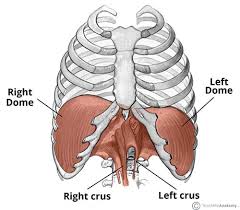
We were asked how many of us had seen a picture of our diaphragm? It’s the largest single muscle in the body and divides it into two parts. The diaphragm is not flat. It goes up into your ribcage (connected to lower ribs).  When lungs expand, it sinks slightly. Your breathing can function in different ways.
The INHALERS and the EXHALERS:

Some people when they are asleep will breath a certain way. On some people you really hear that outbreath (like a sigh). Others breathe the opposite; you really hear the intake.

Sleeping sounds . . .

One is an active exhalation and the other is passive.  We are calling the breathing by the active phase.

EXHALERS:

Sitting in chairs, on edge of a seat, heels slightly up, knees bent- hands on spine and see if it’s supporting. See if you can get your breathing to neutral—not fully inhaled or not fully exhaled (somewhere in middle). Breath out on a “f” sound. See how far you can get on exhalation, feel the muscles which are contracted, hold for count of 3, drop jaw, open throat, release.

Breath naturally again. Get back to plus, minus, zero breathing and repeat. Again, outbreath “f” sound as far as you can go. Hold for 3. Drop jaw and throat and release.

Once more. (no extra inbreath).

Resist the temptation to breath in more. Place one hand on the heart (chest) and one on base of spine (a bit on the side).  See how far down the breath sinks into pelvic floor.

Do it on a “vvv” sound now. Use your leverage, thighs. Relax your lower back. Don’t begin on tension.

See if you can get feeling of a column. You are emptying the column from bottom up when you breath out and filling it down to pelvic floor when you allow breath to breathe in.

Open up so you have the resource from down below.

Flow of sound, release. Release is your preparation to speak.

From plus, minus, zero – get the leverage in balls of feet, out on “v”, release and speak. Really give it some energy. Speak on outbreath. Release. And repeat.

Take time to release. Try a cycle of outbreath, release, speak, speak, speak. Don’t allow yourself too much time to catch an extra breath.

Do this breathing exercise down on the floor (on a yoga mat or carpet or towel). Put a folded towel under your chest and put a nice heavy book on your upper back. So you can see and feel when you are using this or when you are using your upper back to breath. If you use it too much it will choke you off.

Leave chest and shoulders alone. You don’t need them for this.

The reason your feet are in this position is so you are flexible.  Your voice is lifted out of your body (pelvic floor) not pushed.  Jade then went on to work with individual performers.

INHALERS:

The actors in this group were Elsie, Sally, Daniel, Harriet, Ivana, Kent, Dylan, and Andrew.

This group explored a different approach to breathing support for vocal projection.

Lean back on your chair. Get comfortable with your back resting here.  Place your feet a bit forward. Get a sensation of opening in your rib cage and chest. We are looking for an expansion of the rib cage.

The diaphragm is a dome (actually two domes) that reach down to your lower ribs to the front and back.  The ribs are flexible and connected by intercostal muscles.

Keep the shoulders relaxed and lean back comfortably. Put your hands on your lower abdomen. Feel if it is working.

See if you get an expansion in your back and in between your shoulder blades. Leave your lower abdominals alone. Think wide. Feet flat on the floor.

We are trying to get you away from the habit of feeling you need to inflate your stomach.

Think of a cone whose point is pelvic floor.

Stand up. Get feet shoulder wide. Get grounded. Take a gentle in-breath. Palm up and bend elbows slightly. Release jaw. See if you can feel expansion in shoulder blades.

Expand, float, float, float.  Inbreath is spontaneous and outbreath quite slow (as slow as you can make it and very relaxed jaw). Remember you can slide your tongue to the lower teeth. Let your inbreath be as though you are seeing something really inspiring.  Use the movement of your arms to help you.  If possible, we shouldn’t hear your outbreath, just this warm stream of air flowing out of you.

You can even put one foot forward and lean a bit on the back foot as if you were going to drift away. Like sinking into a bath.

“Thinking about breathing into you shoulder blades really helps me,” said one actor.

Other helpful imagery includes: cliffs, bathtubs, clouds, lovely soft bed.

One hand on side (upper) and the other on lower abdomen. 

At home- to see if you are collapsing the ribcage- take a belt or scarf that doesn’t stretch and wrap it around ribcage.

“Woooop.” With hand up.  “Wooop” is on the outbreath.  With your hand you are taking your hand down from your pelvis and out.

Take the image of a wave. It crests and then it spills over. You speak at the crest of the wave. The other group (exhalers) would speak at the spill over.

A little bit of weight on your heels with this is good. Expand rib cage but keep abdominal muscles relaxed. Practice it line by line.

Alas, poor Yorick!

Skulls are hip somehow, right? They are found on clothing—Haute Couture even, tattoos, jewellery, comics, bikers, gangs, home décor, every form of logo and branding.

They are music: The Grateful Dead, Misfits, Metallica, Guns N’ Roses.

Is this about toughness and bravery? A kind of “in yer face,” fu** you death so I’ll wear a constant reminder? A symbol of life? A reminder of mortality and death? The ultimate memento mori: ‘Never forget that you must die.’

Skulls are also props. It has been said that “the skull is probably the most famous stage property in English drama” (Sofer 90), and furthermore, “Hamlet lifting a skull is one of the defining dramatic images of all time.” Whenever one sees an image of a figure in black, holding a skull, it reads “Hamlet.”

Todd Hiddleston as Hamlet

 The skull, Yorick, appears in “a scene unprecedented on the Elizabethan stage. Act 5, scene 1 of Hamlet is apparently the first known scene in English Renaissance drama to be laid in a graveyard, and the first scene in which skulls are used as stage properties” (Softer 90-91). There is no shortage of criticism attempting to unpack its emblematic metaphoric nature. Andrew Sofer, in The Stage Life of Props, argues Yorick’s presence in the graveyard upstages anything Hamlet might say thereby defying literary analysis and becoming much more than a mere emblem. Instead, Yorick “holds the mirror up to nature,” reminding the audience of their own mortality and alluding to Hamlet’s own approaching death.

When Hamlet and Horatio arrive in the graveyard, they observe the Gravedigger who is at work. The two converse about the casualness, perhaps offensiveness, with which the Gravedigger treats the dead, singing as he tosses skulls in the air. Hamlet’s first observation is telling:

HAMLET: That skull had a tongue in it and could sing once.

What initially impresses upon Hamlet is art; here it is music. Perhaps it’s simply a retort to the Gravedigger’s seemingly inappropriate singing? Maybe it’s foreshadowing? After all, the imminent skull belongs to a remarkable singer, Ophelia. I like to think the statement is a testament to the privileged place of art in life, in humanity, but more on that later.

A tattoo inspired by Ophelia
Meadowlark Wreath Skull Ring

Continuing to pontificate on the skull, Hamlet assigns it a variety of roles: politician (perhaps thinking of the murdered Polonius), courtier, lord, lady, lawyer, land owner until she is pulled into an exchange of wits with the Gravedigger, one that is firmly rooted in the audience’s world (even reminding them they are in England, not Denmark). This banter ends when the Gravedigger produces Yorick’s skull; the first skull identified by name. Even the word “Yorick” has a certain ring to it. On first listen, it sounds a bit like a possessive pronoun: “Your it,” pretty apt for Hamlet at this point in the play. Now the skulls are humanised, and even more so because Hamlet loved this one. It is her father’s jester. Unable to distance herself from this skull, Hamlet becomes nauseously sick.

HAMLET: I knew him, Horatio—a fellow of infinite jest, of most excellent fancy. He hath bore me on his back a thousand times, and now how abhorred in my imagination it is! My gorge rises at it. Here hung those lips that I have kissed I know not how oft.

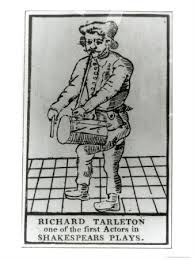
She goes on about the skill of the jester to send people into uproarious laughter. Again, I find it interesting that the skull occupying centre stage in this scene is also that of a performer, an artist, an entertainer.  Furthermore, it has been said that this passage served as an elegy to the clown in Shakespeare’s own company, the late Richard Tarlton, Queen Elizabeth I’s favourite fool. Making it even more poignant is the actor playing the Gravedigger would have been the successor clown in the King’s Men—possibly Robert Armin, said to be apprenticed to Tarlton—the live clown sharing the stage with the dead clown.

None of this has been lost in the theatre. Throughout history, Yorick has been a much sought-after role. Edwin Booth, who played Hamlet on Broadway from the 1860s onward, used the skull of a horse thief given to Booth’s actor-manager father expressly for the purpose of appearing in Hamlet.

Yorick skulls even get reviews. English star George Frederick Cooke’s (1756-1812) skull appeared in a one-off performance in New York and was said to have “enacted a great part that night.”

Author of Les Miserables and The Hunchback of Notre Dame, Victor Hugo bequeathed his skull to actress Sarah Bernhardt. Of course, she used it in the graveyard scene when she played Hamlet in 1899. It now resides in The British Library.

Skull of Victor Hugo (The British Library)

In the late 1980s, Mark Rylance rehearsed Hamlet with the skull of composer and Shakespeare-lover André Tchaikowsky who donated his skull to the Royal Shakespeare Company. Rylance never used Tchaikowsky’s skull in performance, but in 2008 David Tennant did.

Finally one of the best examples, Del Close, father of modern improv, gave his skull to The Goodman Theatre in Chicago to be used in productions of Hamlet and furthermore specified that he be credited in any programs as playing Yorick. His will stated, “I give my skull to the Goodman Theatre, for a production of Hamlet in which to play Yorick, or for any other purposes the Goodman Theatre deems appropriate.” Close’s long-time associate Charna Halpern brought Close’s skull to the theatre inside a Lucite box resting on a red velvet cushion. In 2006, Halpern came clean that medical staff and pathologists refused to remove Close’s head from his body so the one she donated to the theatre was actually purchased from a medical supply shop. [Early in his career, Close played Polonius in a production of Hamlet directed by Robert Falls, Artistic Director of The Goodman.]

Del Close’s “skull”
Source

When asked his feelings about the skull scandal, Falls admitted they probably all knew deep down it was never actually Close’s skull.

“‘So what?’ Which is actually how I feel. He really, truly wanted to do it, and he couldn’t, so the fact that (Halpern) did this was a sort of a theatrical gesture that I think he would have appreciated. It sort of became more symbolic and conceptual.”

Source

These days when the question arises—“Is this really Del Close’s skull?”—the answer comes “It is now.” Ultimately theatrical, the character and actor blur, the empathetic prop performs his skull and Close continues to have his moment on stage.

Of all the theatrical references and metaphors in Hamlet (though often not seen as one), the skull may be my favourite—the paradox of performance—always ephemeral, disappearing, ending while simultaneously absolute aliveness and enduring. One can hardly argue with Yorick or Hamlet for that matter. Even at the end of the play, Horatio confirms that after death Hamlet (along with Claudius, Gertrude, and Laertes) will appear on stage:

HORATIO: give order that these bodies
High on a stage be placed to the view,
And let me speak to th’ yet unknowing world
How these things came about.

And our skull? You’ll have to come see the show to find out. [I can tell you it comes from a woman who I happen to know has a lot of taxidermy in her house.]

Sofer, Andrew. “Dropping the Subject: The Skull on the Jacobean Stage.” The Stage Life of Props, University of Michigan Press, Ann Arbor, 2003, pp. 89–116. JSTOR, http://www.jstor.org/stable/10.3998/mpub.11888.8.

*Here’s a great article I stumbled across after writing this blog: “Yorick’s Afterlives: Skull Properties in Performance” by Elizabeth Williamson. We are fairly aligned in our thinking, and she goes much more in depth about performances of Yorick.  

The Hamlet Magic

I’ve spent the last week uncovering a Hamlet related mystery.

Some time ago I was discussing the Summer Shakespeare production with my colleague Dr. Nicola Hyland when she shared this photo of Ngaio Marsh dressed as Hamlet.

Ngaio Marsh as Hamlet (WS Baverstock; photographer; 1930s; Christchurch)
Te Papa Photography Collection

At the time, I had never heard of Ngaio Marsh, but have since become somewhat obsessed with her. As Nicola says, “she was ballsy [or fallopiany] as.” If you don’t know who Ngaio Marsh is, have a wee look at one of these bio links for the ‘Queen of Crime’:

https://nzhistory.govt.nz/people/ngaio-marsh

https://teara.govt.nz/en/biographies/4m42/marsh-edith-ngaio

https://en.wikipedia.org/wiki/Ngaio_Marsh

Marsh wrote 32 novels about Detective Roderick Alleyn.

Newsweek described her novels as ‘the best whodunits ever written’. The New York Times called her New Zealand’s best-known literary figure.” Eat your heart out, Katherine Mansfield.

Ngaio Marsh was also an artist, playwright, actor and director. She apparently once said she wrote detective novels to indulge her passion for theatre.

In Marsh-style I took up a bit of detective work to discover the origin of the Ngaio Marsh/Hamlet photo. Did the she play Hamlet? Is this another female Hamlet to add to my research, but this time a historic New Zealand example? This blog seems to claim (without evidence) the photo is from a production.

Bill Sheat, a member of the Summer Shakespeare Board and somewhat of a guru of New Zealand theatre history, became a huge inspiration for me, the Watson to my Holmes, or maybe it was the other way around. I scoured the web and books. Bill went not only to his books but also to friends he had who had worked with Marsh or were involved with the New Zealand theatre scene during Marsh’s heyday.

The first thing that I discovered was that there are actually two photos of Ngaio Marsh as Hamlet—one with a mustache and one without.

Ngaio Marsh, reclining in a chair, photographed 1930s by W S Baverstock. 
Alexander Turnbull Library

Both photos appear to be taken at the same session by the same photographer – W.S. Baverstock. Baverstock was a well-known photographer, painter, and authority on Canterbury art. “He designed and made a number of coloured advertisements – lantern slides for theatre use” which also connects him to the theatre world. Likewise, Marsh was a painter and embedded in the Christchurch art scene. I thought they surely must have been well-acquainted.

Ngaio Marsh Painting by Olivia Spencer Bower, c.1934-39
Christchurch Art Gallery

Bill reached out to some of his friends. They were puzzled. One friend confirmed that Marsh would not have played Hamlet with Alan Wilkie’s Shakespeare Company who she toured with in 1919-20. I had already come to this same conclusion because the dates didn’t match.

The living person who seems to know the most about Ngaio Marsh, having worked with her, is Elric J. Hooper. Bill was unable to reach Elric, but here is a copy of his 2012 “Inaugural Ngaio Marsh Lecture”. In this lecture, he speaks of Marsh’s later, 1943 production of Hamlet, but he clearly doesn’t have any information on the photographs. He references one in his lecture:

“(The importance of the Prince of Denmark comes up in a very strange photograph of Ngaio Marsh, to be seen on the net, dressed as Hamlet looking sombre in tights and cloak with a small moustache inked in. She is in her twenties perhaps.)”

Inaugural Ngaio Marsh Lecture, Elric J. Hooper, 2012

I decided to investigate the dates and Marsh’s life more. The mustached Hamlet photo is dated “1930s” and the bare-faced Hamlet example is dated “1936-37?”. Ngaio Marsh went back to England in 1928 where she established an interior decorating shop called Touch and Go, in Knightsbridge. While Marsh was in London, she saw Gielgud’s very first Hamlet at the Old Vic in 1930. She discusses the production in her autobiography Black Beech and Honeydew*:

“The first Shakespeare that I saw in the West End was John Gielgud as a very young, petulant and smouldering Hamlet with, or so I thought, enormous promise rather than present achievement”

Black Beech and Honeydew (202)
Gielgud as Hamlet, 1930

Marsh returned to NZ in 1932 when her mother became ill (who eventually died later that year of liver cancer). The mid-1930s dates of the photos match the time she would’ve been back in Christchurch and exhibiting work with The Group, a collection of modern artists of which Baverstock was also associated. Bill found a photo in The Biography of Ngaio by Margaret Lewis of Marsh with other artists at a 1936 Group Exhibition. Included in the photo is WS [Billy] Baverstock. In conclusion, Marsh, who would’ve been about 40 years old at the time (not in her 20s as Hooper supposes), a lover of theatre, a lover of Shakespeare and Hamlet (the play she would direct very soon to much acclaim), inspired by Gielgud, dressed up as Hamlet and posed for her fellow artist/friend Baverstock to take photos.

To me, this is just as monumental as if I had found out Marsh played Hamlet. Posing for a photograph is a kind of performance. These photos demonstrate that she saw herself as a type of Hamlet – see blog post ‘This is I”. She clearly felt very connected to the play and character. On one occasion she referred to the character as “the Hamlet magic” (Black Beech 242). Furthermore, she described the Wilkies’ opening night of Hamlet  as ‘the most enchanted I was ever to spend in the theatre.’ 

It could’ve been that she longed to play the role herself, but this wasn’t a prospect at the time. Described as “very tall, with a deep voice,” Marsh had played cross-gender roles when she was performing with the Rosemary Rees English Comedy Company. In her autobiography, she describes volunteering to play a male role when the original actor “Jimmy” came down with scarlet fever (156). Marsh had to wear a wig because she feared her mother’s negative reaction if she had cut her hair. This worry of judgment was confirmed when Marsh wrote to her mother excitedly to tell of her success in playing the male role, and her mother voiced her strong disapproval and forbade Marsh to cut her hair. To console Marsh, Rees held up Miss Vesta Tilley or Lady de Freece as exemplar. [Vesta Tilley was one of the most famous male impersonators at the time.] Marsh’s mother likely wouldn’t have approved of her daughter playing Hamlet.

MS 310/1467. Miss Vesta Tilley.

In 1943—when for over twenty years there had been no professional Shakespeare in Christchurch—Marsh chose to direct Hamlet with a group of students from the university. It was modern dress, contemporary, with music composed by Douglas Lilburn. Marsh brought Hamlet to her world. She said,  “This is an immediate affair, it happens now and all the time. The predicament is ours.” (Black Beech 239). It was wartime, and Marsh had made her production speak to that generation. The show was a massive success which resulted in professional tours and Marsh becoming recognised nationwide as a director of Shakespeare.

Hamlet, produced by the University of Canterbury Drama Society and performed at the Civic Theatre [11 July 1958]

I love this Marsh/Hamlet thread in our theatrical whakapapa. Looking at Stevie (Hamlet) perform I can almost picture Marsh stepping out of the photograph and on to the stage. Marsh said, “Nothing binds human beings together more quickly than theatrical endeavour provided all is well in the company and the feeling of emergence and growth persists” (Black Beech 240). Today marked the end of our initial week of rehearsal post-break, and we culminated with a full-run of the play outdoors for the first time. One can already feel the binding, emergence, and growth. I cannot wait to see our Hamlet, the Hamlet for now.

Stevie Hancox-Monk (Hamlet) as Flute in A Midsummer Night’s Dream

*Interesting fact about Marsh’s autobiography is that readers seem fairly dissatisfied with the book because she spends too much time talking about theatre and New Zealand and not enough material is devoted to her crime novels and writing.

**Special thanks to Bill Sheat.

“This is Shakespeare so it’s time to go big or go home.”

On Saturday we had our last full company rehearsal before Christmas break. (We are breaking for two weeks over Dec/Jan for the holidays.) The first half of the day we listened to design presentations which included the music/SFX, set, costume, and lighting/LFX of the play. Below is a summary of the key points of the design pitches, and then I give my own take.

Joel (music): Joel talked a lot about finding a Gothic theme. Much of his presentation included references to other works. For the overall soundscape, he discussed a recipe of inspiration: the music in Hitchcock films such as Bernard Hermann’s North by Northwest. To this he added Ligeti (Kubrick films), Wagner’s Das Rheingold, and Sondheim (Sweeney Todd). Key words and phrases were dissonance, unstable, disturbing, ethereal, devoid of melody, almost devoice of rhythm, depths of the river (Rheingold), turbulent, no one knows where it’s going.

Following the soundscape, Joel delved into some specific pieces of music needed in the play. For the Ghost of King Hamlet, he talked about The Banshee by Henry Cowell; he loved the idea of movement like haunted creaking buildings and the stress of a ghost pushing through air. Ophelia and the Gravedigger are getting more contemporary treatments. Ophelia’s “mad songs” had references ranging from Aria Grande’s “Thank You Next” to Taylor Swift’s “Look What You Made Me Do.” Joel described Ophelia songs as living “somewhere between anger and disappointment.”  Finally, Joel arrived at reggae as a genre for the Gravedigger’s tunes after drawing inspiration from his Maori background and Tangi.

Lucas (set): Lucas is the set designer and the overall lead designer for Hamlet. The context for the set design is a modern, non-specific locale influenced by drama and scale—a powerful event—a la the works of Pina Bausch. In the words of Lucas, “This is Shakespeare so it’s time to go big or go home.” He is creating a modern take on Elsinore as a castle influenced by Brutalist architecture. The set will make use of flags for movement and scale, and to indicate new locations. For example, flags can be used to create an entire army (think Fortinbras) with only a few people on stage. Flags can also become props such as carpets, beds, regal rugs, etc.

Another aspect of the castle is a sense of surveillance and spying.  In Hamlet, all the characters do this to some extent: Polonius and Claudius spy on Hamlet, Hamlet spies on Claudius, Polonius spies on Laertes in France, etc., etc., etc.  In the architecture of the space, Lucas hopes to create nooks and crannies, dark spaces from which people can disappear and reappear—basically, a space where you can never feel quite alone. In addition to human spies, cameras will also operate from these spaces.

Lucas presents his design.

Jodie (costume): For Hamlet, Jodie estimates she’ll need to create around 40 costumes! Like Joel, her working question is “What is a Gothic aesthetic?” She’s also been researching Scandinavian style. Her big influence is British fashion designer Alexander McQueen and the powerful silhouettes of the 1930s. Rather than simply going with dark, black tones for Gothic, Jodie is interested in pastel Goth. This is in part to contrast with Lucas’s set, but this is also about the connotations of white-based value. For example, in Japanese culture (and we’ve been working with some Japanese performance styles in rehearsal such as Suzuki and Butoh) white is associated with death.

Jodie presents her mood boards.

David C. (lights): Like the other designers, David’s lighting will have a contemporary feel. His ideas are that the monarchy of today= big corporations (like Apple).  When corporations light spaces their focus is about impressing a mood. Often a space will be warm, bright, inviting. Light almost provides a cover-up or wash to the darkness that is happening underneath. How do corporations light found spaces?

This idea of the “found space” was what interested me most about all of the design ideas. Shakespeare, outdoors, in the summertime, in some garden or park has become a universal performance trope. When I lived in the U.S., these ranged from city or state Shakespeare festivals—such as the Nashville Shakespeare Festival that occurred every year in Tennessee—to the massively famous Shakespeare in Central Park by the Public Theatre in NYC. Dr. Rosemary Gaby, of the University of Tasmania, has written an entire book on the subject from an Australian perspective: Open-Air Shakespeare: Under Australian Skies (2014).

As I said in my first blog post, the Wellington Summer Shakespeare has been running for a number of years in outdoor spaces. The “home” of Wellington Summer Shakespeare has often been considered the Wellington Botanic Gardens, specifically The Dell, an large clearing behind the Begonia House with a ready-made stage.

The Dell

Shakespeare and site is a particular interest of mine as a researcher. I enjoy these outdoor Shakespeares because they invite a different type of audience—one that is not the theatrical elite. This theatrical elitism is commented on by Bridget Escolme in ‘Shakespeare, Rehearsal and the Site-Specific’.  Following Fiona Wilkie, she cites Mike Pearson’s assertion that alternative venues work to:

. . . challenge the notion that the auditorium is a neutral venue of representation and see it rather as a spatial machine of a dominant discourse which distances spectators from spectacle and literally ‘keeps them in their place’, in the dark, sitting in rows, discouraging eye-contact and interaction.[i]

 I love that outdoor Shakespeare ruptures this ‘keep them in their place’ with crowds sprawling on picnic blankets with insects and barking dogs, natural light, babies crawling, food and wine.  But I don’t believe in just plopping a Shakespeare play in the middle of a garden because it’s summertime (though as I write this “summertime” is debatable in New Zealand).

When the Hamlet designers discussed their ideas, lead designer Lucas in particular, they talked a lot about “using what is there,” i.e. in The Dell.  Lucas discussed taking design cues from the space itself such as the nature of the tall trees, the angles in the location, the washed wood. He wants to make everything in The Dell look purposeful such as incorporating the ramps and stairs. One of the reasons he wanted to employ flags in his design was to literally animate or bring life to the set by capturing the wind movement. If there are two things that go synonymous it’s Wellington and wind. Though she didn’t mention it herself, when Jodie discussed the pastel colour palette I couldn’t help but think of the begonias themselves and pastel floral hues.

Wellington Botanic Gardens

Many Shakespeare plays suit an outdoor, garden-type setting. I am thinking here of the pastoral Forest of Arden in As You Like It or the woods in A Midsummer Night’s Dream. At first glance, a play like Hamlet doesn’t seem particularly apt to the great outdoors, but the more I heard the designers speak and the more I thought about the text itself I became particularly excited by the idea of an outdoor, garden-setting Hamlet.  Here are a few allusions from the play that seem to engage with site.

Hamlet is full of references to gardens.  Hamlet compares the rotten state of Denmark to an unruly garden:

HAMLET: Fie on ’t, ah fie! ’Tis an unweeded garden
That grows to seed. Things rank and gross in nature
Possess it merely.

The Ghost also uses the idea of “weeds” to spur Hamlet on to revenge:

GHOST: I find thee apt;
And duller shouldst thou be than the fat weed
That roots itself in ease on Lethe wharf,
Wouldst thou not stir in this.

And the murder for which King Hamlet would seek revenge occurred in a garden.

GHOST: Now, Hamlet, hear.
’Tis given out that, sleeping in my orchard,
A serpent stung me. So the whole ear of Denmark
Is by a forgèd process of my death
Rankly abused.

Hamlet repeats this locale in The Mousetrap. He explains the plot to Claudius:

HAMLET: He poisons him i’ th’ garden for his estate. His
name’s Gonzago. The story is extant and written in
very choice Italian. You shall see anon how the
murderer gets the love of Gonzago’s wife.

And later she indicts her mother, the Queen, in the closet scene:

HAMLET: Confess yourself to heaven;
Repent what’s past; avoid what is to come;
And do not spread the compost on the weeds,
To make them ranker.

The Dell

The garden can invoke many things here. It’s a microcosm of the universe, morality, a reflection of “human nature,” a representation of the first garden, the Biblical Eden, and man’s fall—complete with a sinful, devil serpent. To me there’s something exhilarating about watching Hamlet in the same setting where the murder which sparks all the events of the play occurred.

There are over 30 uses of the word “nature” in the play. In one of the more famous passages of the play, Hamlet discusses the idea and purpose of theatre in its entirety as holding “the mirror up the nature.”

Additionally, botanical imagery, particularly flowers, appears throughout the play. Often these are associated with Ophelia and her madness: the flowers and herbs she picks and distributes to the court, the flowers and willow tree poeticized by Gertrude as she describes Ophelia’s drowning (“crow-flowers, nettles, daisies, and long purples”), and finally the flowers the Queen scatters on Ophelia’s grave (“sweets to the sweet”). Again the garden-setting is placing the audience in these “unscene” places of death.

There are so many other aspects to the outdoor setting that I could discuss here. For example, our production will begin with last hours of sunlight, with the sun setting around the half-way mark, and the sky will be in full darkness by the time the stage is crowded with dead bodies and Horatio says, “Good night sweet prince: / And flights of angels sing thee to thy rest!” The most popular “performance” at The Dell is weddings, and the play begins shortly after the wedding of Claudius and Gertrude. Another lens is our larger context of Aotearoa / New Zealand and the geographical, cultural, and spiritual connections our country has with its bush gardens and land. Another is the early modern theory of the humours with its elemental (fire, water, earth, air) basis. I will end my explorations here, but hopefully this has sparked your imagination to the possibilities and provocations of staging Hamlet outdoors in nature.

Escolme makes a plea for work that might begin with ‘here’ as origin:

I would like to imagine a Shakespeare whose starting point, at least, is site rather than verisimilitude, a rehearsal process that begins with the question: what does this mean if I say it here? (here in time, here in space, here in front of an audience sitting or standing there) rather than: ‘what does my character mean when she says this?’. The rupture between four hundred year old texts and audiences now, theatre buildings now, and cities now might then be productively made and remade.[ii]

What will a 2019 Hamlet in Wellington Botanic Gardens say? Will audiences and actors immersed in natural phenomena feel a special connection with the play that–possibly above all others—stirs us to examine our own natures?

Hamlet, garden setting
Source: LUNA, Folger

[i] See Bridget Escolme, ‘Shakespeare, Rehearsal and the Site-Specific’, Shakespeare Bulletin. 30:4 (Winter 2012): 505-522 (p. 506); Mike Pearson, ‘Special Worlds, Secret Maps. A Poetics of Performance’ in Staging Wales: Welsh Theatre 1979–1997, ed. By A. M. Taylor (Cardiff: University of Wales Press, 1997) 94-5; and, and Fiona Wilkie, ‘Mapping the Terrain: a Survey of Site-Specific Performance in Britain’, New Theatre Quarterly, 18:2 (2002): 140–160.

[ii] Escolme, ‘Shakespeare, Rehearsal’, 521.

give it breath with your mouth

“give it breath with your mouth, and it will discourse most eloquent music.”

Hamlet 3.2.350-51
Hamlet Voice Workshop #2

On Saturday we had our second ensemble voice workshop with Jade. This blog (as was the last one) is dedicated to that workshop.

Birgit Nilsson

Jade began by discussing Opera star Birgit Nilsson, who could project over a 140 piece orchestra. When asked the secret to performing, Nilsson replied, “comfortable shoes;” and when asked the most important part of the body for voice, she said, “my feet.” Jade uses this to illustrate the strength that you have vocally comes from your sense of ground. 

Ride of the Valkyries – Apocalypse Now

Connection, energy, grounded: We begin sitting in chairs, comfortably, feet flat on floor. Place your hands resting comfortably on your thighs. Close your eyes.

Close your eyes and feel your feet on the floor.

Starting from your feet, notice how your body is now resting. Feel the soles of your feet on the floor. Wiggle your toes a bit so you get a sense of those joints. Notice your connection to the earth. As though your feet have roots, reach down with those roots. Let your breath come naturally. We don’t want to TRY and do anything at this point. Allow.

See how you feel most comfortable sitting-back against chair or away. Get a sense of your back- most importantly. If you don’t sense your back, lean it into the chair.

Get a sense of your back on the chair.

With your feet on the floor, wander with your awareness to your feet and ankles-all the bones. These two pieces of your body that hold you up are quite complex.

Your two feet hold you up.

Wander up your shins, your calves. If you sense any tightness, relax. Into your knee joints. See if in your mind’s eye you can see your kneecaps.

Feet!

See where your shinbone meets your thighbone. What does that joint look like?

How do your thighs feel resting on the chair?

How do your palms feel resting on your thighs?

Go up to your hip joints, pelvis: ball-in-socket. Move your legs a little bit as if you pushing one knee forward and releasing it and then the other. Sense how you are sitting on the chair. See if you feel your intestines resting cupped by your lower pelvic bone. See if yuu feel any of your breath going down that far. When your diaphragm sinks your intestines are gently pushed downwards.

Can you feel any movement in your lower back? Kidneys? Tailbone (coccyx)?

Move the legs again that way and see if you feel the joints where pelvic bone is connected to sacrum. Climb very gently up your spine and as you do become more and more aware of your breathing. Are you feeling breathing lower in your body because we started at the feet? Can you feel lower ribs expanding and releasing? Can you get a mental picture of your diaphragm.

See if you can feel your shoulder blades move as your breathe- coming together and apart. If you have a lot of tension in your upper back breathe into there and see if you let it relax- your shoulders, collarbone, sternum, breastbone. Be aware of your posture here. 

Now go into neck region, throat. See if the muscles there feel relaxed or tensed.

Relax your jaw.  Don’t mean yawn or stretch. Simply let your tongue slide out to your lower lip. It’s not sticking your tongue out.

Don’t yawn, stretch, or just stick your tongue out.

Just let it slide past lower teeth. Your mouth is slightly hanging open and tongue resting. Feel what that does to your breathing and the muscles of your face and neck. How does your tongue muscle feel? Do you notice any changes in eyes, forehead, ears? Listen for a moment. How does your hearing feel? Can you listen through the back of your head, throat, nasal passages, top of skull?

Let your tongue slide past your lower teeth.
A wee illustration from last year’s Summer Shakespeare.

Vocalise with hum (recreate what we did last time).

Hum.

Place one hand on your chest and the other hand on the back of your neck. Continue the humming and be aware of that change – where you can feel your voice – vibrations. Feel free to change pitch-slide up and down. Keep the connection with soles of your feet.

Hand on the back of the neck to feel the vibrations.

Go exploring with your hands. See where you can feel vibrations.

Use your hands.

If you can feel it in your upper back go down and see how far you can actually feel it.

If there is some place you cannot feel it then put your hand there and see if you can actually feel it through your hands- elbow, calves, buttocks, ankles?

Using the hands to explore the voice.

Slide up and down and see what happens to the vibration.

Come to a stop.

How are you feeling in your sitting? Are you really sitting in your body?

Rub your hands together really hard until they really get warm and separate them to about elbows distance and then move them slowly together and feel the energy resistance (without touching). Now begin to hum and feel what happens with the energy between your hands. When you’ve got that then do the same thing (rubbing together) but then try putting your hands in front of your chest, head, throat. See what happens to that energy. Just go with it.

Feeling the energy with your hands.

Let that fade and let your hands rest again on your thighs.

You can repeat this exercise with a partner – placing your hands on them and allowing them to resonate into your hands. You can slide humming into vowel sounds. You can also do this without direct contact – only the energy of the hands 1-2 inches away (rub your hands together before placing them in front of your partner’s body). 

Partner work.

Voice is energy and connection. 

“words of so sweet breath composed”

At last night’s rehearsal, we had our first voice workshop with coach Jade Valour. In this post, I am focusing on this work for archival purposes, as a resource for the cast, and for my public followers, as a chance for you to step inside the rehearsal room and actors’ processes. [You may even wish to try this exercise yourself. I believe theatre work is multipurpose – even healing.] This is not a direct transcription, but rather my own reconstruction.

Roll out your yoga mat.

We begin on the floor lying on yoga mats. Let your body rest on the floor with your eyes shut. Try not to fall asleep. Feel a sense of your whole body and the floor supporting your body. Start from heels, relax your feet—a lot of time we have of tension in our feet. Relax your thighs, buttocks. Relax the muscles in your lower abdomen. Feel where body is touching floor and where there is space. Ease your upper back chest, your rib cage. Begin to get a sense of you breathing. Don’t force anything. Allow. Natural. Relax your arms, elbows, wrists, pecs, hands, each individual finger. Soften your neck. Roll your head 1 cm side to side, gently. Release your tongue and jaw (atlas axis).

Lie down comfortably.

See for yourself where the centre of your breathing is. See if you can extend it outward. Use it as a point of departure. Extend the feeling for your breath outward from there. Don’t force anything—just be curious and explore. Can you sense it in your fingertips? In your spine? Moving up and down your spine? Breathing all the way out from your inner self to your extremities. Expansion and contraction.

Prana goes beyond the air. “Prana” is a Sanskrit word understood as vital energetic lifeforce or the basic energy that drives us in life. The entire universe is a manifestation of Prana, which is the original creative power.*

Where can you feel yourself breathe?

In the most comfortable out-breath, make whatever sound comes out. A little moan. A little groan. Keep your breathing relaxed. Let the sound come as naturally as your breathing. Be aware of the exact moment when air becomes sound. When your vocal cords come together to make sound. Focus on that moment. What happens in your body when the air becomes sound, becomes vibration? It’s a magic moment. It’s spiritual; “In the beginning was the WORD . . .” It’s elemental. Think of a baby’s first cry. Notice where vibration starts and where it radiates to in your body. From the source outward.

The magic moment when breath becomes sound

Close your lips. We are going to work with a hum. Hold that same origin moment. Notice where your voice resonates in your throat and in your head.

Hum.

Focus on your spinal column. You can change your pitch. Slowly go down your spinal column with that awareness –vertebrae by vertebrae. You are consciously sending your voice down your spinal column. Is it radiating? Down your spine into your shoulders? Into your thoracic vertebrae and into your ribs? Keep your awareness for the space you are creating in the pause. Go a bit further to the small of your back. Can you feel the bones of your pelvis vibrating? Thigh bones. Knees. Shins. Bones of ankles. Through ankles into all the little bones of your feet. See if you can feel vibrations in soles of your feet.

Think about your pair joints. Ankles, knees, hips, shoulders, wrists, jaw. Make sure vibration is going through there and notice any blocks. Do not judge blocks; just become aware of them. If you find blocks, see if you can use vibration to get energy going through there. Use a comfortable slide.

Come to stop and see if you notice any difference in how your body is on the floor.  Try some gentle movement. Can you still feel your skeleton and spine? Rib cage and pelvis? How do your muscles feel now? Slowly and gently move fingers and toes, joints and knees, hips, shoulders, roll your head a little bit. When you’re ready, roll to whatever side you choose. Your head should be the last thing that comes up. Slowly come to a  sitting position.

Anything in you particular that you noticed?

Here are a few notes:

Don’t work hard at it. Cajole yourself.  Friendly. Gentle persuasion.  Use your imagination. Make it fun.

Be kind to yourself.

Stillness is rich. You can draw upon that as an actor. There’s potential.

If you get restless, move a little bit. See if you can become aware and make use of it. It is energy that can be used. Whatever comes up, go with it and explore it.

Fortinbras goes for a run.

Your hands are very important. For example, try putting your hand on your head and humming. How can you access your head now?

Hands.

There is such a connection between imagination and your voice.

Do this exercise as often as you can. Three times a week at minimum (every couple of days just to remind your body). It doesn’t have to be long. It should be part of your warm-up. It could be simply five minutes.  

Hamlet and Ophelia rehearse.

The exercise in a nutshell:  Start with relaxation and feeling your body. Get a feeling for your body on the ground. Start getting a feeling for your breathing next. Once you have a sense of body and breathing as a whole then explore your voice. When breath becomes sound is a magical moment.

QUEEN: Be thou assured, if words be made of breath,
And breath of life, I have no life to breathe
What thou hast said to me.

Hamlet 1964

Postscript:When Jade was 14 years old she saw the 1964 John Gieldgud production of Hamlet on Broadway starring Richard Burton. She still has the programme. Fifty-four years later, she has a DVD of the production from Aro Video and is literally giving voice to a new generation Hamlet in New Zealand. I love these anecdotes as they attest to the universal connecting power of theatre and Shakespeare.

*If anyone is interested in the concepts of prana, cellular breathing and energetic movement patterns, come find me. This informs my practice as a yoga teacher.

There’s a special providence in the fall of Jack Sparrow (or what the heck happens in Act 4 of Hamlet)?

William Shakespeare: I have a new play.

Christopher Marlowe: What’s it called?

William Shakespeare: Romeo and Ethel the Pirate’s Daughter.

Christopher Marlowe: What is the story?

William Shakespeare: Well, there’s this pirate… In truth I have not written a word. (Shakespeare in Love)

In the 1998 film Shakespeare in Love (which I like to think of as a piece of ultimate Shakespeare fan-fiction) the story begins with Shakespeare suffering from writer’s block as he works on a new comedy, Romeo and Ethel, the Pirate’s Daughter. It’s funny, right? Because how could THE prolific BARD ever have had writer’s block? Ha. How could a name like “Ethel”ever substitute for “Juliet”? Ha. Ha. How could Shakespeare write about pirates? Ha. Ha. Ha . . . wait, he did. A lot. And included an entire episode with them in what is considered his loftiest play.* It’s also an incident that is possibly Shakespeare’s invention as it does not appear in the narrative sources for the play.

We reached a point in Act 4 rehearsals this week where everyone confessed they had no clue what was happening in Hamlet plot-wise. This wasn’t for lack of  close reading. It’s confusing and non-linear. Hamlet disappears, and we get bits of an off-stage story through cryptic letters and gaps are filled in several scenes later.

After Hamlet stabs Polonius in the third act, Claudius sends her, in the company of Rosencrantz and Guildenstern, to England under the guise of protection. Claudius reveals in a short soliloquy that he has in fact given Rosencrantz and Guildenstern a sealed letter which orders the “present death of Hamlet” at England’s hands (4.3.63). Hamlet then vanishes for the rest of the fourth act. (Pragmatically speaking, Hamlet’s absence is justified as the actor needs this time offstage to prepare for the fifth act and sword fight.) In 4.6 Horatio receives sailors who bring letters from Hamlet (who is calling herself an “ambassador”) which reveal part of the story, and later in 5.2—“I have words to speak in thine ear will make thee dumb”—Hamlet herself completes the story for Horatio. Pieced together, here is a full (or as full as the text allows) account of Hamlet’s journey.

HAMLET’S OE TO ENGLAND

Hamlet, Rosencrantz, and Guildenstern board the ship to England.

Hamlet is troubled –“in my heart there was a kind of fighting” (5.2.4)- and cannot sleep. She impulsively rises, throws her seamen’s coat around her, and steals Rosencrantz and Guildenstern’s papers from their room. She returns to her cabin, opens them, and exposes Claudius’ execution orders—her own beheading.

Hamlet sits down and writes a new commission which states the bearers of the letters (i.e. Rosencrantz and Guildenstern) should be put to“sudden death” and seals the letter with her father’s signet which is in her purse.

The next day, a pirate ship pursues Hamlet’s vessel and a fight ensues. During the grapple, Hamlet boards the pirate ship. The pirates deal with Hamlet like “thieves of mercy” (aka they treat her well) as she promises them something in return, perhaps a reward or ransom. Hamlet returns safely to Denmark, but proceeds herself with letters via the sailors to Horatio (revealing she is returned and the sailors will take Horatio to her) and also letters to Claudius and Gertrude.

The letter to Claudius is read aloud by him and is a cheeky little note announcing Hamlet’s “naked” return. (“Naked” as in “destitute” or possible “unarmed” but again, funny that Hamlet uses that word.)

The contents of the letter to Gertrude are never divulged, but one probable version is that Hamlet reveals to her mother Claudius’s treachery. In the first Quarto, there is a scene between Horatio and Gertrude which leaves no doubt the Queen knows about Claudius’s murder plot.

To bring this all full circle, in the final scene, the English Ambassador confirms, “Rosencrantz and Guildenstern are dead” (5.2.355).

This entire episode has been viewed as artistically questionable—especially the sea adventure, but it’s worth further consideration. When next we physically see Hamlet, she is in the graveyard with Horatio (perhaps this is a bit of foreshadowing as to where this journey will ultimately end), and she is changed. I don’t believe “Hamlet and the Pirates” is arbitrary or a weird Shakespearean plot contrivance. There is something about Shakespeare’s use of the sea. Think of all the incidents in Shakespeare plays where the sea or ships—either through tempest, voyage, or even figuratively—are used to signify a massive shift in perspective. Indeed, water is marked with symbolism—of baptism (death and birth—resurrection), fluidity, emotion, and the sea is emblematic of all this and much more (“sea of troubles”). It is interesting that in the double-perspective of Hamlet and Ophelia they both go into the water at the same time in the play, only Ophelia sinks and Hamlet emerges, at least temporarily. It’s an existential journey.

Cape Reinga, New Zealand (photo by author). A highly significant area to Maori, it marks the point from which Maori wairua (spirit) return to their traditional homeland (source: DOC)

Let me give one powerful example in Shakespeare’s writing about the metamorphosing power of the sea. These are some of my favourite words from Shakespeare. They appear in his last solo play, The Tempest.  In modern diving technology, if something is lost five fathoms deep in the ocean it is irretrievable. It is another story of a dead father:

Full fathom five thy father lies;
Of his bones are coral made;
Those are pearls that were his eyes;
Nothing of him that doth fade,
But doth suffer a sea-change
Into something rich and strange. 

Sea-nymphs hourly ring his knell:
Ding-dong.
Hark! now I hear them — Ding-dong, bell. (Ariel)

One of my favourite renditions of this song by Paul Englishby from the 2016 RSC production.

Though difficult to follow, what happens to Hamlet offstage in the fourth act is important thematically. What is Hamlet’s sea-change?

 *Pirates were common in Shakespeare’s day and appear and/or are referenced in a few of Shakespeare’ splays such as Pericles and Measure for Measure. Hamlet’s episode with the pirates has also received critical attention, including an entire book—Hamlet & the Pirates by Derek S. Savage. The arguments usually involve an exploration of the pirate adventure as a deus-ex-machina and/or sources for the incident, including a sermon that compares pirate-capture to Purgatory.

Swamp Ophelia

“I remember thinking, ‘Oh, it’s so Ophelia.’ So maybe I’ll go back and rehandle it, and I’ll figure out how to tell the story of Hamlet combined with something else.”

Wesley Schultz of The Lumineers
Gregory Crewdson, “Untitled (Ophelia),” 2001

At this afternoon’s rehearsal groups gave presentations based on research topics assigned at the beginning of our process. I left thinking about Ophelia, especially because, Jenny (aka Ophelia), was interested in modern day responses to the character. [Expect a follow-up post about Ophelia, mental health, and early modern feminine madness.]

Quite simply, Ophelia is a character that resonates with audiences—especially modern ones. Ophelia is icon for girl—teenage girl, girl in crisis, girl with regulated sexuality, girl with tragic (perhaps eroticised) death.*

Before I was a Shakespearean, I was a girl—a girl of the 90s,  and my connection with Ophelia was, aptly, through music. Female singers had a kind of heyday in the 90s; I think it was something to do with Alanis Morissette and the Lilith Fair. In 1998, Natalie Merchant released an album, song, and film titled “Ophelia.”

Ophelia was the rebel girl 
A blue stocking suffragette 
Who remedied society between her cigarettes 
And Ophelia was the sweetheart
(“Ophelia,” Natalie Merchant)

My favourite “Ophelia” album, however, was one by The Indigo Girls, an indie lesbian folk rock duo from Athens, Georgia (affinity should be obvious). Released in 1994, it is called “Swamp Ophelia.” If you don’t know it, open Spotify this minute. Here is a bit about the album from Sojo Magazine, “Swamp Ophelia is a plant; it’s an actual plant,” explains Indigo Girl Emily Saliers about  . . . Swamp Ophelia. “I was walking through a nature preserve and I saw this plant,” Amy Ray adds. “When you think of Hamlet, Ophelia, and swamp, it all mixes together. We thought it sounded cool.” [Ophelia is actually the name of a lot of plants.]

Cypress moon bald in June
Like the granite in a stream
Swamp Ophelia I’m torn down
Let your waters let me drown
(“Touch Me Fall,” The Indigo Girls)

Trading Walkmans for the web, for today’s youth Ophelia finds expression on a different medium, Web 2.0 with its user-generated content and participatory culture. Ophelias play out on Tumblr, Flickr, Facebook. On YouTube there are over 23,500 videos tagged “Ophelia”. 

These two fan videos are set to Natalie Merchant’s “Ophelia”: 

https://www.youtube.com/watch?v=-c39jrqd3Ss&t=80s

https://www.youtube.com/watch?v=dSSjmMxRDDI&t=89s

Then there are the vlogs. In “Ophelian Negotiations: Remediating* the Girl on YouTube,” Stephen O’Neill says, “the vlog involves the remediation of the soliloquy, at once appropriating its form and dispersing it via the video distribution platform. Through remediation, the young performer in Ophelia’s Vlogs simultaneously finds an online alias or identity, in a sense ‘becoming’ Ophelia, and also replaces the older technology of representation that is Shakespeare’s character” (http://www.borrowers.uga.edu/1281/show#subtitle1 ) O’Neill is referring to a now defunct 2012 vlog that you can still watch via his linked article. Many other, more recent Ophelia vlogs have taken its place.

To provide one example, here is a series of 8 vlogs uploaded by OpheliaGirl15 which chart Hamlet and Ophelia’s tumultuous relationship:

OpheliaGirl15 says she created the blogs as part of an English assignment. (There’s a noteworthy portrayal of Hamlet in these vlogs as well.)


For more “Ophelia media” see O’Neill’s article where he links to several examples and discusses the “YouTube-Shakespeare-Ophelia triptych” and how postmodern feminist identities play out online, arguing that Ophelia has become a discourse and a brand

O’Neill suggests, “Ophelia may prove an attractive text to teenage girls precisely because the delimited agency she is apportioned in Hamlet resonates for them.” He says, “For Sujata Iyengar and Christy Desmet, video responses to Ophelia remedy ‘the perceived ills or omissions of earlier forms of art’ (Iyengar and Desmet 2012, 62*), so that while Ophelia is revivified through each remediation, it is a different Ophelia from the one scripted by the play. As they observe, ‘Ophelia requires amore complete biography than Shakespeare could ever have imagined for her’ (73).”

Whether it be a 90s album or  vlog, these works show contemporary culture’s fascination with Ophelia and unease about the gender politics of Hamlet. They serve as a kind of remediation of the heroine – a way to redress, remedy or fulfil her story. So I ask, how do we remediate Ophelia in live performance using the text of Hamlet?

Oh, Ophelia, you’ve been on my mind girl since the flood
Oh, Ophelia, heaven help a fool who falls in love (The Lumineers)


[Postscript: Ophelia songs didn’t stop in the 90s. Have a listen to The Lumineers’ “Ophelia” released in 2016]

*If you are interested in the concept of Shakespearean girlhood, look at the work of Deanne Williams who I had the pleasure of meeting earlier this year: https://www.radionz.co.nz/national/programmes/saturday/audio/2018658677/professor-deanne-williams-looking-for-shakespeare-s-girls

*Remediation: A new medium authenticates itself in relation to “earlier technologies of representation,” or re-purposes those technologies and their cultural functions (Bolter and Grusin 2000, 46, qtd. in O’Neill).

*Iyengar, Sujata, and Christy Desmet. 2012. “Rebooting Ophelia: Social Media and the Rhetorics of Appropriation.” In The Afterlife of Ophelia. Edited by Kaara L. Peterson and Deanne Williams.Basingstoke: Palgrave. 59-78.